Showing posts with label best manual changeover switch. Show all posts

Tuesday, 25 January 2022

Automatic Transfer Switch or Manual. Which Is Best?


If you have a generator as a backup in the case of the local electricity mains failing, it is a legal requirement to have a transfer, or changeover, switch. This is for two reasons.

First there is the danger to electricity workers. If the generator has been powered up and the mains reconnects, it could back feed electricity into the mains. There is also a danger to the generator because if the mains powers up again while it is running it could burn out your generator. So, the system is designed so that the generator and the mains can never be in contact with one another.

Now your transfer switch can either be manually operated or it can be automatic. A manual changeover switch requires somebody to be on the premises when the mains power goes down whereas an automatic transfer switch does not. Both perform the same function, but the automatic transfer switch does it automatically which saves time and reduces the power outage length. 

If the power goes down and you have a manual changeover switch, it means that you have to go to wherever the generator is situated and start it up. Once it is up and running, you can then manually switch to the generator. Of course, when the mains power comes back on you have to reverse the procedure by switching off the generator and only then can you switch back to the mains.


The Automatic Switch Does It For you

An automatic changeover switch does all this for you. It monitors the mains power and when it goes down it sends a signal to the generator to start. When the generator is running at full speed it sends a signal back to the transfer switch telling it to disconnect from the mains and connect to the generator.

Some automatic transfer switches do not have mains detection built in. In this instance, the mains detection would have to be in the generator or elsewhere. If the generator detects a mains power outage, it sends a signal to the automatic transfer switch to disconnect from the mains and then starts up. Once it is running it sends a signal to the changeover switch to now connect to the generator.

At Blades Power Generation we have a complete range of both manual and automatic changeover switches. Manual transfer switches are less expensive, but for the sake of convenience, an automatic transfer switch is the preference of most people.

Monday, 1 March 2021

Revealing the Importance of Manual Changeover Switch

In this era, we cannot imagine a home without a power supply. However, electricity may turn deadly for people who are not accustomed to it. With a manual changeover switch, the homeowner just needs to flip a switch to change the power draw from commercial grid to generator.


How To Hook Up A Manual Changeover Switch?

The steps to hook up a manual changeover switch are as follows


manual changeover switch

-

●       Connect the armored cable from the transfer switch back to the electric panel

●       Now, connect the ground and the neutral wires from the transfer switch to the correct bus bars present on the main panel

●       Identify the first circuit that the generator will power

●       Take out the power wire from the existing circuit breaker

Expenses Of Hooking Up A Manual Changeover Switch

A manual changeover switch may take approximately $500 to $900 to install. This amount includes labor charges.

What Is a Three Phase Manual Transfer Switch?

A three-phase manual transfer switch is used to switch between two power supplies. Alternately, it may be used to switch in between loads. Hence, they may also be used as isolation switches. Two most commonly used three-phase manual transfer switches are as follows-

●       A compact changeover switch- It is rated 20 Ampere to 125 Ampere.

●       A heavy-duty unit- It is rated between 63A to 3150 Amps

Features of Manual Transfer Switch?

The features of a manual transfer switch are as follows-

●       Auxiliary Contact Kit-

It is pre-wired with terminal blocks. It is also offered as a standard feature with open execution manual changeover switches.

●       Handle

It has a flip-flop operating handle for ratings 250 AMP and above. It enables the users to use the switch with both hands. The handle also allows padlocking in its OFF position. It has three padlocks ranging from 05 to 07. The defeat feature of the handle is available both in the On state and during the restoration of the panel door

●       Compact Design

●       Clear termination access

●       Permission to select the manual and auto mode

●       Auxiliary contacts

●       Fuse Protection

●       Padlocking

●       Flexibility in mounting

Conclusion

Product development is an ongoing process. The main motive behind designing a changeover switch is to transfer electricity from a commercial power grid to a local generator. This transfer takes place when no outage occurs.  Thus, when the homeowners or the business owners experience a power failure, they may switch over to the generator just by pressing the manual changeover switch.


Friday, 15 April 2016

Transfer Switches - What Are They And How To Find The Best One

With backup power sources and generators becoming a common gadget both for residential and business use, a greater awareness is spreading about the need and the advantages offered by transfer switches. Whenever an electric utility power supply outage occurs, it is simply not recommended to power the mandatory circuits directly for light, heat and refrigeration. Instead one should go for the more advantageous and safe option of accessing the generator through the double throws switch option. Thus its best to first understand what exactly is a switch and its various aspects.


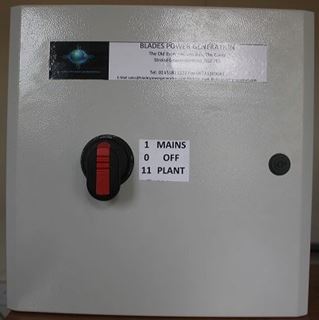
http://www.bladespowergeneration.co.uk/4-pole-manual-changeover-switch-100-amp-steel-case


Transfer switches are those switches through which the generator power is accessed in case of power outages and supplies to all circuits which need to run using that electrical power. These not only switch off the power utility line and open the generator line in the scenario of an outage but also reverse the process smoothly when the grid power gets restored. There are basically two types of switches- the manual changeover switch and the automatic switch.


Manual switches are mostly hardwired to the control panel and are best used for portable or standby generators. These need to be manually turned off and on whenever a power outage occurs or gets restored. This may not prove useful in all occasions but it certainly is a much cheaper and simpler option and requires much less maintenance. These are normally wired to the essential circuits that need to be powered up like lights or furnace blowers which cannot run on an extension cord.


Automatic switches automatically get the generator power flowing whenever they sense a drop in the line voltage and turn the generator power off and reconnect back to the utility line whenever they sense that the line power has been restored. These can be used in conjunction with portable generators as long as it has an electric starter. However, they are mostly used with large unit, in entities where an uninterrupted power supply is critical for smooth running of the business and units.


Regardless of the type, the size of the switch that you use would be in contingent with several factors and aspects of your business like the size of the utility service used by you, size of the generator installed and the number and types of the appliance that must be run on it. Normally, the switches sizes vary from 50 amps to 200 amps. The one that would best suit your purpose is best determined by the electrical and back power house supplier experts. If you have little idea about which one is the right size, it is best to ask the expert to avoid any problems later on.


No matter what type of switches is used, certain certifications and approval are required and they must be regularly maintained to avert any untoward incidences because of their malfunctioning. They should always be installed by an expert electrician and thoroughly inspected and checked from time to time. Any omission or carelessness here can cause severe loss both financially and otherwise.