Tuesday, 21 February 2023

Care For Your Generator Before It Is Too Late

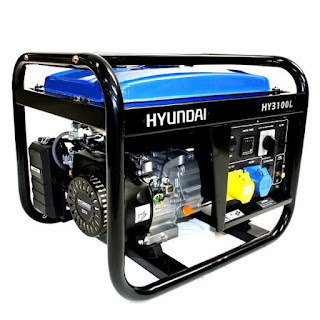
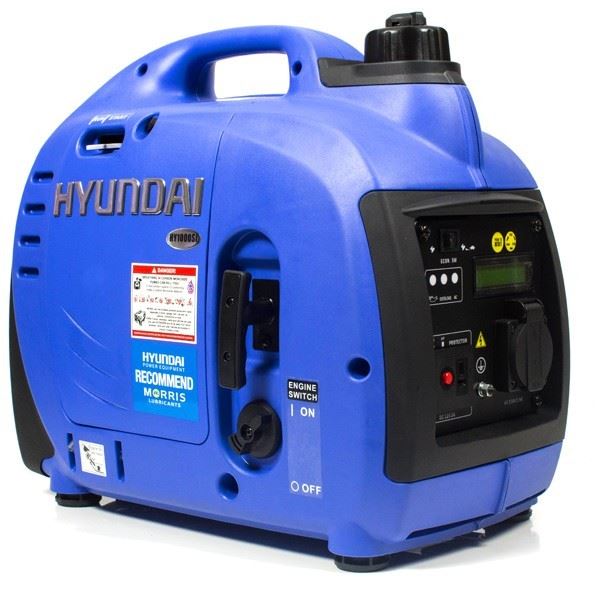
Are you planning to buy a new generator in the UK? A generator is undoubtedly a worthy investment in an era where 24/7 connectivity is a necessity. However, there are a few maintenance tips you must follow to prolong the life of your generator and keep it functioning for years. 


5 tips for generator maintenance for extended use

  1. Change oils and lubricants regularly: It is the first and the most important step of caring for a generator. Just like a car, generators also need oil changes. In the case of a new generator, the first oil change should be done after 20 hours. Then consequently, after every 100 hours, you must change the oil. You can also stock up on oil so you do not run out. 
  2. Power up the generator every three months: If the generator is seldom or has not been used in a long time, charge it for 30 minutes every three months. It ensures that the engine is working smoothly. You can also identify minor problems and repair them before an emergency. 
  3. Inspect the air filters: Air filters protect a generator from dust and debris that can otherwise get into the combustion chambers. Old and clogged air filters lose their efficiency and can damage the engine. Therefore, it is essential to change the air filters frequently, especially if using the generator daily. 
  4. Avoid using stale gasoline: Stale gasoline can damage the engine of a generator. Therefore, always use fresh gasoline. If you seldom use the generator, then drain the gasoline when not in use. You can use a stabiliser to make it last longer; however, that is not a permanent solution. 
  5. Allow the generator to cool down before refuelling: Before adding gasoline to the generator, ensure that it has cooled down. Give at least a 15 to 20 minutes window. You can start a fire by pouring gasoline into a hot generator, especially if it spills onto the hot engine parts. The briefest fire incident can damage the generator beyond repair and cause life threats. 

Buy a new generator in the UK with Blades Power Generation:

We are your one-stop destination for finding the best backup power sources and services. Be it for your home or office, restaurant or hospital, we have a solution for everyone. Based on your requirement and budget, Blades Power Generation matches you with your ideal generators. 

Sunday, 30 October 2022

Should You Use A Manual Or Automatic Changeover Switch?

More businesses these days are installing a standby generator that will keep them powered if / when the mains power goes down. The way things are in the UK today, there is ever more likelihood of power outages, and if this should happen to you, your business is going to come to a halt. Having a standby generator will enable everything and everyone to keep functioning when the mains power fails.

If you are considering installing a generator, it needs to be of the appropriate size to run all of the equipment that you use in your business. At Blades Power Generation, we have generators in a wide range of sizes, ranging in price from £482 to £20,594, so there is bound to be one that is right for your business. We also have a number of second-hand generators available, so there may be one that is the right size for your business for a lower cost.

Whatever size of generator you need, you will also need a changeover switch. This performs the function of switching off from the mains when the power goes down and then switching to the generator when it is up and running.


There are two types of changeover switch, either a manual changeover switch or an automatic one. Whichever type you choose, that again has to be of the right size. The big advantage of a manual changeover switch is the cost.

Downside

However, there is a downside, as you can imagine. When you have a manual switch and the power goes down, you need to switch off from the mains. You then have to go to the generator and start it up. When it is running at full power, you then have to go back to the manual switch and switch it over to the generator.

Then, when the mains power is back on, you have to go and switch the manual switch to the “off” position, then switch off the generator, then go back to the switch and switch back to the mains.

It is a legal requirement to have a changeover switch because if you did not, and the mains power came into contact with the generator, it would almost certainly burn out the generator. The other way around, if the generator power should backfeed into the mains it could put the lives of workers at risk.

All in all, although an automatic generator is more expensive, it is by far and away the best option.

Thursday, 22 September 2022

The Benefits Of An Automatic Changeover Switch - Vs - Manual

If you are thinking of buying and installing an electricity generator for your home, you are not alone. With all of the situations that we are facing just now, including the lack of gas from Russia, the race to go green which has resulted in lack of drilling for oil in the North Sea, and the hold that was put on fracking in the Northwest, the possibility of power outage is as great as it has ever been. So, buying a generator for your home makes a lot of sense.


At Blades Power Generation, as our name suggests, we can provide you with the generator for your home or business that you need. The most important thing when buying a generator is to ensure that you have one which will produce enough power for your needs. 

Different Sizes

Generators come in many different sizes as far as power output is concerned, so if you are going to buy one, you need to calculate what size you need. Ideally, you should then invest in a generator which can produce a bit more than you need. There are ways of calculating your requirements yourself, but it is better to let a qualified electrician calculate the figures for you.

You will also need what is known as a changeover switch. This is a legal requirement. When the power goes down you have to change from the mains to your generator, and vice versa when the mains power comes back on. However, you cannot have both mains power and generator on at the same time. This could cause your generator to fail and/or result in injury to engineers working to restore the mains.

So, the changeover switch is used to switch from one to the other. You can have either a manual changeover switch or an automatic changeover switch. If you have a manual switch, it means that when the power goes down you have to go to your generator and fire it up. Then once it is running, you can manually switch from mains to generator. Equally, when the power comes back on you turn off the generator and switch back to the mains. All fine if you happen to be at home. Not so good if you are away for a few days and your freezer goes down and maybe your tropical fish don’t get the warm water they need.

As you might guess, an automatic changeover switch does all this for you, firing up the generator when the mains power goes down and then switching over to it. And of course, the other way around when the power comes back on again. So much easier and simpler.  


Wednesday, 20 July 2022

What To Do If You Do Not Have A Standby Generator And The Power Goes Down

If you are running a business that relies on electricity - and apart from farmers and gardeners, who isn’t? – there are some things that you need to know if the power goes down. We take electricity for granted, but the way the world is going it is very likely that there will be many more power shortages in future.

What with the lack of oil and gas from Russia and the fact that, in the UK at least, we are not going to have new fossil fuel-run cars from 2030, we are going to need more electricity than we are using now. Add to that the fact that our government doesn’t want to begin fracking, and we are heading towards the day when the lights going out will be a regular occurrence.

This is why more and more businesses – and families as well – are investing in generators in order to provide continuing electricity when the power goes down.


automatic changeover switch


When, not if, it does, there are some things that you need to do if you don’t have a generator. The first is to switch off appliances when the power goes down. If you have a laptop, you can run it on the battery, of course. But you need to switch appliances off because when the power comes back on there can be a power surge. This can cause damage to the appliances. It is OK to leave a light on because that will tell you when the power is restored.

Check with your neighbours, whether business or other residents. If they have power, the issue is likely to be in your own home or business, soyou will need to call an electrician.

There is a free service in England, Scotland, and Wales which you can call on 105 on your mobile. This can give you information regarding a power cut in your area and an estimate of when the power will be back on.

If you run a business, you may also want to call important customers to let them know that you have an issue. You can also do this using your business social media.

Of course, the perfect answer is to invest in a backup generator for your home or business connected to an automatic changeover switch. This means that when the power goes down, the automatic changeover switch will instantly fire up the generator, and when it is up and running switch from mains to generator. So, you will only be without power for a matter of seconds.


Thursday, 24 March 2022

A Used Generator Could Save You A Lot Of Money

April 1st is only just around the corner, and for many people it is going to result in a vast increase in their electricity bills. The energy price cap is going to increase by no less than 54%, which means that those on default tariffs paying by direct debit will see an increase of £693 from £1,277 to £1,971 per year. Prepayment customers will see an increase of £708 from £1,309 to £2,017.

Furthermore, what many people haven’t taken into account is that the prices are going to be lifted again in October.The Chief Executive of Ofgem, Jonathan Brearley, said “The energy market has faced a huge challenge due to the unprecedented increase in global gas prices, a once in a 30-year event, and Ofgem’s role as energy regulator is to ensure that, under the price cap, energy companies can only charge a fair price based on the true cost of supplying electricity and gas”.

However, for many people, a price increase of 54% is not going to seem a “fair” price. No wonder April 1st is called “April Fools’ Day”.

Used Generators


Why Not Buy Your Own Generator?

So, what can you possibly do about it? One thing might be to consider purchasing a generator of your own, as it may be that you can produce a fair amount of the energy you need for electricity with one of those in your own backyard. It is certainly worth looking into.

Many people already have a standby generator for their homes and businesses because power outages do happen, and they have been occurring more frequently with the recent storms that have blown in. If you have a standby generator, you can team it with an automatic transfer switch which will mean that when the power goes down it will only affect you for a matter of seconds. This is because the switch will detect the power outage, fire up the generator, and then the lights will come straight back on.

Not only that, but you can buy used generators today. It operates just like the second-hand car market. When you buy a new car, you trade in your old one and the dealer then sells it on. The same thing works with used generators, so you can buy a second-hand one for a lot less than a new one. So, you can save money on the generator and also save money on your electricity bills in a lot of instances.

Thursday, 24 February 2022

Why Buy A New Generator? Save Money With A Used One


If you are thinking of investing in a generator to power your home or your business in the event of a power outage, you are one of a growing number of people who are realising that outages are likely to become more common, and that if you want to continue using electricity when they occur then you do need to have a backup.

To some extent it is a personal choice, because some people would consider having even one power outage too inconvenient and that it warrants a generator anyway. However, if you live in an area with frequent outages – by which we mean more than three blackouts a year – or ones that go on for hours or even days, then a generator is more of a necessity than a convenience.

used generators for sale in UK  
 

Generators are available in a wide range of sizes and are sized by kilowatts – the amount of power that they can produce. One kilowatt is a thousand watts, so a 17kw generator can produce 17,000 watts of electrical power. So, the size of generator that you need will be determined by the amount of power that you need to produce to run your electrical appliances. In order to work out the size of generator that you need, it is a good idea to have an experienced electrician to calculate the amount of power that you require.

There are two main costs associated with a generator and they are the cost of the generator itself and the cost of installation. It also needs to sit on a concrete base, so you have to allow for that as well. You can buy a 1kw generator for as little as £300, but the cost of installation, which takes 2 – 3 days, will add another £1,000 on top. A 15kw generator is around £6,000, while a 45 kw one would be £10,000. (Those are estimates, of course).

However, you don’t need to buy a new generator. At Blades Power Generation we have used generators for sale in the UK. This is much the same as buying a second-hand car. It will work perfectly OK but will cost a lot less than new. Sure, it might have a couple of scratches, but if you can save £1,000 or £2,000, or even more it’s well worth it.

Our stocks of used generators for sale in the UK obviously change all the time, so contact us with your requirements.

Tuesday, 25 January 2022

Automatic Transfer Switch or Manual. Which Is Best?


If you have a generator as a backup in the case of the local electricity mains failing, it is a legal requirement to have a transfer, or changeover, switch. This is for two reasons.

First there is the danger to electricity workers. If the generator has been powered up and the mains reconnects, it could back feed electricity into the mains. There is also a danger to the generator because if the mains powers up again while it is running it could burn out your generator. So, the system is designed so that the generator and the mains can never be in contact with one another.

Now your transfer switch can either be manually operated or it can be automatic. A manual changeover switch requires somebody to be on the premises when the mains power goes down whereas an automatic transfer switch does not. Both perform the same function, but the automatic transfer switch does it automatically which saves time and reduces the power outage length. 

If the power goes down and you have a manual changeover switch, it means that you have to go to wherever the generator is situated and start it up. Once it is up and running, you can then manually switch to the generator. Of course, when the mains power comes back on you have to reverse the procedure by switching off the generator and only then can you switch back to the mains.


The Automatic Switch Does It For you

An automatic changeover switch does all this for you. It monitors the mains power and when it goes down it sends a signal to the generator to start. When the generator is running at full speed it sends a signal back to the transfer switch telling it to disconnect from the mains and connect to the generator.

Some automatic transfer switches do not have mains detection built in. In this instance, the mains detection would have to be in the generator or elsewhere. If the generator detects a mains power outage, it sends a signal to the automatic transfer switch to disconnect from the mains and then starts up. Once it is running it sends a signal to the changeover switch to now connect to the generator.

At Blades Power Generation we have a complete range of both manual and automatic changeover switches. Manual transfer switches are less expensive, but for the sake of convenience, an automatic transfer switch is the preference of most people.

Wednesday, 17 March 2021

Automatic Transfer Switches: Purpose and Function

Much as our electricity suppliers do their best to keep power available on a continuous basis, there are, nonetheless, occasions when the power fails. This can be for one of many different reasons, but when it happens to you it can be anything from a bit of a nuisance to an outright disaster. It rather depends upon your situation.

For instance, if you were watching a programme on the TV, it may be annoying, but it is hardly going to be life-changing. However, if you were a surgeon in the middle of a tricky operation when that same power outage occurred and all the lights went out, that can be extremely dangerous for the patient.

Furthermore, power outages can occur for a few minutes or may continue for many days. For example, after the Great Storm of 1987 many people were without power for up to two weeks as engineers worked to get power lines back up and working again. This is why some sort of backup is vital in many situations, and for many people the answer is a generator. At Blades Power Generation, we supply both new and used generators.

Since one doesn’t want to have run outside to the generator in order to start it up, the answer is what is known as an automatic transfer switch, or ATS as it is known. Power backup is often by a generator but can also be a second mains supply. In the latter case, the primary power supply into a building is backed up by a secondary supply and the ATS changes over to that instead of a generator.

If using a generator for the secondary supply, it is essential to check it and give it a test run on regular basis so that one can be confident that it will perform as required if there is an outage. 

Of course, there are many situations where power is required other than simply inside a home or other building. For instance, if there is an outage in an area, all of the streetlights and traffic lights would go out. This means that traffic slows to a crawl at crossroads, car accidents increase, and emergency services cannot get to where they need to be. An automatic transfer switch overcomes these issues.

Of course, there is another issue, and that is that the power can be restored at any moment. When this happens, it can be dangerous, as there would be a power overload and this can cause wiring and appliances to burn. However, the ATS works both ways, so that as soon as power is restored it switches back again and allows the generator, if one is being used, to rest. 


Monday, 1 March 2021

Revealing the Importance of Manual Changeover Switch

In this era, we cannot imagine a home without a power supply. However, electricity may turn deadly for people who are not accustomed to it. With a manual changeover switch, the homeowner just needs to flip a switch to change the power draw from commercial grid to generator.


How To Hook Up A Manual Changeover Switch?

The steps to hook up a manual changeover switch are as follows


manual changeover switch

-

       Connect the armored cable from the transfer switch back to the electric panel

       Now, connect the ground and the neutral wires from the transfer switch to the correct bus bars present on the main panel

       Identify the first circuit that the generator will power

       Take out the power wire from the existing circuit breaker

Expenses Of Hooking Up A Manual Changeover Switch

A manual changeover switch may take approximately $500 to $900 to install. This amount includes labor charges.

What Is a Three Phase Manual Transfer Switch?

A three-phase manual transfer switch is used to switch between two power supplies. Alternately, it may be used to switch in between loads. Hence, they may also be used as isolation switches. Two most commonly used three-phase manual transfer switches are as follows-

       A compact changeover switch- It is rated 20 Ampere to 125 Ampere.

       A heavy-duty unit- It is rated between 63A to 3150 Amps

Features of Manual Transfer Switch?

The features of a manual transfer switch are as follows-

       Auxiliary Contact Kit-

It is pre-wired with terminal blocks. It is also offered as a standard feature with open execution manual changeover switches.

       Handle

It has a flip-flop operating handle for ratings 250 AMP and above. It enables the users to use the switch with both hands. The handle also allows padlocking in its OFF position. It has three padlocks ranging from 05 to 07. The defeat feature of the handle is available both in the On state and during the restoration of the panel door

       Compact Design

       Clear termination access

       Permission to select the manual and auto mode

       Auxiliary contacts

       Fuse Protection

       Padlocking

       Flexibility in mounting

Conclusion

Product development is an ongoing process. The main motive behind designing a changeover switch is to transfer electricity from a commercial power grid to a local generator. This transfer takes place when no outage occurs.  Thus, when the homeowners or the business owners experience a power failure, they may switch over to the generator just by pressing the manual changeover switch.


Friday, 29 January 2021

Invest your money in the latest and useful portable generators in the UK

As the generators are almost a basic need now,especially in extreme weather conditions, they come handy, and you should get one. You must remember some factors and information regarding the generators you need to know before stepping into the market. All these data help you to choose the right product and make your investment fruitful in every possible means. You must look for the following elements in an inverter generator-

Components or parts

A generator consists of an engine and an alternator. The engine turns the alternator on to produce AC power for use through the voltage power regulator for the required supply. You can use this power for any purpose in your household.

new portable generators for sale in the UK

Types

The generator available and usable are of different types of portable in one of the famous and useful. The term portable is relatively used to mention the inverters' flexibility as they provide power to the area or house or institutions as and when required. Though the smaller size and lighter models can be carried from place to place, you need human resources to change the placement for larger ones. You can get new portable generators for sale in the UK.

An inverter generator is needed to be mentioned differently as they produce AC power, which gets turned into DC and then again transform back to AC power for usage in the required section. Though the portable ones are inverter generators, they are dedicated to generating DC powers individually.

You can also use standby generators that are permanently connected to a house or office and project the power's utility in the area or place. They offer ability whenever there is a necessity, and the people don’t have to spoil their work midway. The automatic connection transforms into the inverter.

Other factors

Besides all this, you must also know the quality of the product and the warranty the manufacturer provides. Other facts related to the items' manufacturing characteristics when you are planning to buy new portable generators for sale in the UK.


Wednesday, 30 December 2020

The Various Points to Consider while Buying a Generator

When we think about backup power, generators come to mind. Whether you are investing in a first-hand or a second-hand generator, one needs to do functional screening to make sure that the mechanical efficiency is in good health. If you are planning to buy the best emergency power source in the UK, it is imperative to know your requirements so that the best functional efficiency can be obtained. Usually, generators come with long warranty periods. However, checks must be carried out to determine that there is no case of an overload when appliances are connected to it. Follow the following specifications to check a generator.

best emergency power source


Age

When buying the best emergency power source in the UK, one must check its age. Especially in the case of a second-hand generator, check its odometer or performance. Checking the mechanical efficiency will help you identify the best one. Most generators fail to perform to their full potential due to overloading. Maintenance is an important aspect of elongating the life of a generator.

Inspection

A thorough inspection includes checking the brand, various specifications of the generator, customer feedback, etc. Before buying, one must make a list of the various requirements that he expects from the generator. Self-inspection is crucial when you are investing in anything big. Physical inspections should also be done about colour, condition, weldings, rust, etc.

Load Test

An initial load test can be done with a calibrated load bank. It will help you understand the efficiency of the generator. To check the capability of a generator and its capacity of bearing multiple appliance load, unit test s must also be carried out.

Size

This is another crucial point where one must make sure of the space where the generator will be placed after purchasing. A spacious, well-ventilated corner with no inflammable objects nearby is always advised. The size of the generator should be considered to avoid any accidents.

Warranty

Always check for manufacturer authenticity, warranty, and insurance prospects. One can save a lot of money during a repair or a maintenance job.